The post Top Inbound Marketing Tools for Happy Customers appeared first on Webplanners.
]]>And we agree to the fact that “Happy customers are your best advocates”.
Customer retention is one of the most critical challenge that businesses are facing today. That’s where inbound marketing plays a pivotal role. But there is a common myth surfaced around Inbound marketing that it’s all about generating new leads for your business online, but is untrue. The truth is, that the inbound methodology also includes delighting and retaining existing customers.
The role of marketing today is as much about delighting existing customers as it is attracting new ones. You want to make sure customers have a great experience using your product or service so they not only become repeat customers, but ideally, spread the word through referrals or social media and become your brand promoters/ambassadors.
Why Inbound Marketing?
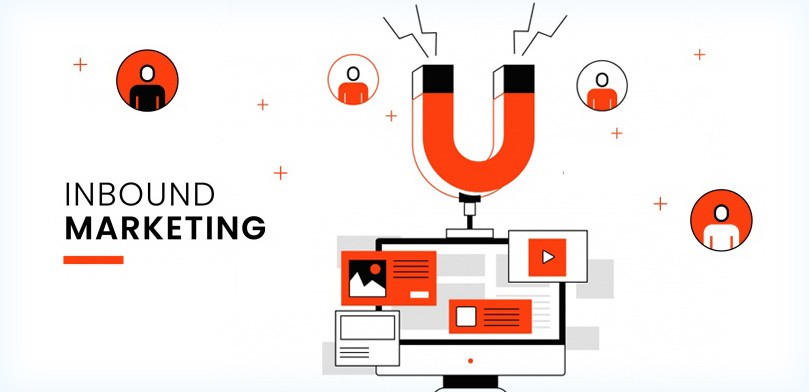
Inbound marketing is data driven and multi-channel approach that works as a magnet to attract people to your brand, engage them and convert them to repeat customers. It accounts for where people are, and how they want to interact with you using the main driver of quality content. It allows you to bring visitors into your site through various forms of channels like blogs, email marketing, and social media. The delight stage helps you nurture customers into promoters and advocates for your brand.
But how do you delight them?
Simply by keeping them engaged, continuing to be helpful, and continuing to support them with content that informs and adds value. Apply your humanity to your business personality. Build real relationships with your clients. Personalise all your efforts. Go a step further in your content marketing efforts and educate your customers with valuable content offers that helps them accomplish challenges further down the road.
How small business can use inbound marketing tools & strategies to delight customers?
Create Customer-Centric Content
Customer-focused content is one of the most effective ways of keeping your existing customers happy. To fulfil your customer’s needs, use smart content and smart CTAs to provide resources that are relevant. Customer-focused content creates an emotional connection. Create content that can help them get the most out of their relationship with you and your product.
Smart CTAs
Every page on your website needs a call-to-action (CTA) to guide visitors to the next step in your conversion path. The CTA is the difference between someone visiting your site and leaving no trace other than their IP address and a conversion, earning insight and permission to communicate with them in the future.
Build a Relationship Through Social Media
The relationship between businesses and customers has evolved a great deal with the rise of social media. Find out which social media platforms your customers are more likely to be engaged on and find creative ways to interact. If you are not connected with your customers on social media, you’re missing out on opportunities. Brands should learn how to interact with people in a way that they enjoy. If you engage with fans and share valuable, entertaining, or informative content that is suited to the platform, people will be more than happy to have you on their timeline next to friends and family.

Provide relevant content
You already know the critical information about your customer in the buying process. Use what you know to provide them with helpful relevant content.
Stay connected with email marketing
Email workflows are great for reaching out to existing customers. Why not make it super simple for them to provide a review of your business online? You can reach out to your database of customers using email workflows. It will not only help you nurture relationships but you can also establish a human interaction. Remember, each campaign should have its own singular goal with one call to action.
Continue to be helpful in every possible way
Using your expertise and in-house resources, continue to provide information that your customers are looking for. Be it related to your products, services, or questions related to latest trends etc. The information can be in the form of blogs, webinars, eBooks and emails. With all this shared knowledge you are building trust with your customers and you will be a brand they want to promote.
Use recognition
Connecting with your customers on such a personal level is powerful stuff. No matter what product or service you’re selling, it’s the experience customers remember long after their purchase is complete. Taking the time to recognize, thank, or congratulate your customers goes a long way in building relationships. This can be as simple as sending a coupon, a birthday acknowledgment or an invitation to an event. Making a personal connection with customers can cement your relationship like nothing else. Not only will they rave about you to their friends, they’ll be more likely to think of you first the next time they’re shopping.
Analyse your campaigns
Look back at your campaigns and find out what was your customer’s reaction to it and how did they receive it. If something did not work out as you thought it would, how can you make it better this time? Ask your customers for feedback as to how can make it better.
Deliver what you promise
It’s the business rule number one – deliver what you promise. If you are a business owner, you should be doing all you can to induce this trust in every customer you deal with.
Enhance Customer Collaboration
Customers can become better clients when they learn from situations just like their own. Empower your customers to work together by building a community between them. Facebook groups and online forums are great ways to build communities within your customer base.
Final thought!
Regardless of whether you’re in marketing or sales, it’s easy to focus on attracting the next lead or sale. Don’t forget to stay focused on delighting existing customers! Your customers hold the power to influence others in the buyer’s journey. The goal of inbound marketing is to build a mutually beneficial relationship between brands and customers.
If you’re looking to grow your business or you’re struggling to relate to and retain clients — or you just want some more top-notch customer delight examples — give us a buzz and let us help with a customised lead generation strategy.
The post Top Inbound Marketing Tools for Happy Customers appeared first on Webplanners.
]]>The post What Makes Content Truly Meaningful in 2025? (A Writer’s Guide) appeared first on Webplanners.
]]>So, writing and posting a blog is one thing – but writing a blog that will get people to stay and read is a whole different ball game.
And if you follow us on social media, you’ll notice that we rave about the importance of writing meaningful content – not necessarily just the typical, brain-numbing information that you read to a kid to get them to fall asleep.
But the pressing question is, what is meaningful content? And how do you write it?

According to WordPress, in 2017 alone there was an average of 86.4 million new posts and blogs written.
Think about that number… 86.4 million.
Not views, not comments but… blog posts.
The current population of Australia in 2018 is 24.72 million.
From those statistics it would take every man, woman and child in Australia a lot of constant blog writing to hit those numbers.
However, despite so many blogs being written every month, there is one thing that stops them from being a worthwhile read… And that thing is heart.

In other words, these blogs are not meaningful in the way that they connect with and engage with the audience.
The difficulty in writing meaningful content in a ‘narrative’ sense is that what is meaningful is subjective, and differs from person to person.
However, from a digital marketing perspective it means to what extent does the content speaks directly to their targeted audience and what they want.
To illustrate this let’s say you are a food recipe website.
Your audience are people who visit your site for quick and easy budgeted recipes which is, of course, consistent with your branding and offerings.
Let’s say the next recipe you post is long winded and talks about what the dish means to you personally.
Is this meaningful content?
The answer is no.
From a narrative or story telling perspective perhaps, but digital marketing wise, this completely loses the plot.
When writing meaningful content there are many factors that digital marketers must consider.
Let’s start with… Why?
The ‘why’ is the foundation of all your content writing, all your topics from how you will write, who you write to and so on.
There is no point writing content if you do not have direction and consistency.
The repercussions for this is inconsistent branding and confusion amongst your followers…
Here are some benefits to why you should be writing meaningful content
SEO purposes:
Firstly, quality content generates better conversations and thus would gain more natural links from other websites or people.
When this happens, it tells Google that your content is quality enough for people to recommend on their website.
This leads to higher search rankings.
Secondly, meaningful content is quality content, so people stay longer on your website and take time to read what you have to say.
The lower bounce rate also tells Google that the information on your page is valuable and should be sought after.
Writing meaningful content does not refer to creating a lot of low quality links or engaging in keyword stuffing because too much of it not only reflects poor content, but Google eventually punishes your website rank for it.
Building Brand Trust and Loyalty:
The purpose of your business or any business that has a website is to attract customers to become more exposed to your brand or offerings.
Creating meaningful content that appeals to your potential customers increases the number of people coming to your website to check out what you have to offer.
If people see the value in your content, they’ll come back for more.
And the most important note to make is that you don’t want to push products in their face otherwise it will deter them from coming back.
What does meaningful content look like?
What meaningful content looks like varies from person to person and from business to business.
To shape what your content looks like, the most important questions to ask is what do I want to write about and to whom am I writing this for?
Keeping these two in mind should help dictate and provide a sense of structure to any content you write.
An important thing to note is that you should let your audience take the content and not force it onto them.
It may just sounds like a bunch of marketing fluff, but really, it’s just inbound marketing in play.
According to Hubspot, Inbound marketing encourages making content that listens and speaks to the audience rather than pushes agendas and messages at them.
Below are some things to consider when writing meaningful content.
Listen to industry buzz
“Did you check out the latest updates on Facebook?“
“What updates? Nope not really..”
“Lame”
Keep your ears peeled for the hottest and latest trends, updates in your industry.
It shows that you are interested in the field and that you’re constantly engaged.
People don’t want to fall behind the race and constantly want to be updated..
For example, in the digital marketing industry, the new year in 2018 has ushered in new updates on major social media platforms.
It is not only in ours but our readers best interest to know and understand about these updates.
As a result, we have written 3 blogs about social media, one about Facebook’s 2017 updates, Facebooks 2018 Updates and then Instagram’s 2018 Updates.
Listen to you readers
Let’s take this scenario for example:
You’re a science website that writes science blogs.
The way your brand is and how you’ve marketed yourself is to an audience that has no expertise in science.
However, studying science for many years, you continue to write your blogs comfortably in terms you don’t think are too technical…
Your blogs aren’t getting any reception and hits and therefore your website isn’t getting anything either.
Why?
It’s because you haven’t listened to your audience…
What makes content meaningful is writing what the audience wants and is looking for.
In this case your audience were looking to your scientific content to be written in layman’s language and not scientific (even though you are writing about science).
As a result, your audience disengaged and went somewhere else to fill in that gap.
You can listen to your audience through looking at engagement and your analytics, asking them directly or by conducting surveys.
The more information you have on what your audience wants the better.
The whole page of just plain text is the standard… and it can be boring.
1. Connection: connect people to subjects that matter
2. Originality: new and original ideas, ways to conveying information. Having your own voice
3. Meaningful Content has variety: look to drawing sources from other links, provide graphics and videos to help explain what you mean.
Recent trends on social media algorithms tend to favour the graphics and video formats of providing content.
As a result, you’ll end up with more exposure and engagement with your audience.
4. Meaningful Content involves actions and provide results: Remember people come and search for your blogs to find solutions to their problems the same way customers would look to your offerings.
Having this mentality when you write will help you be more concise with the direction of the blogs.
Providing Value
As with any business, depending on your branding and offerings, it will appeal to different audiences.
The goal then is to determine what is it that they look for?
Two prominent marketers Smith and Colgate, developed a value-based framework to help distinguish between the different values people seek in an offering.
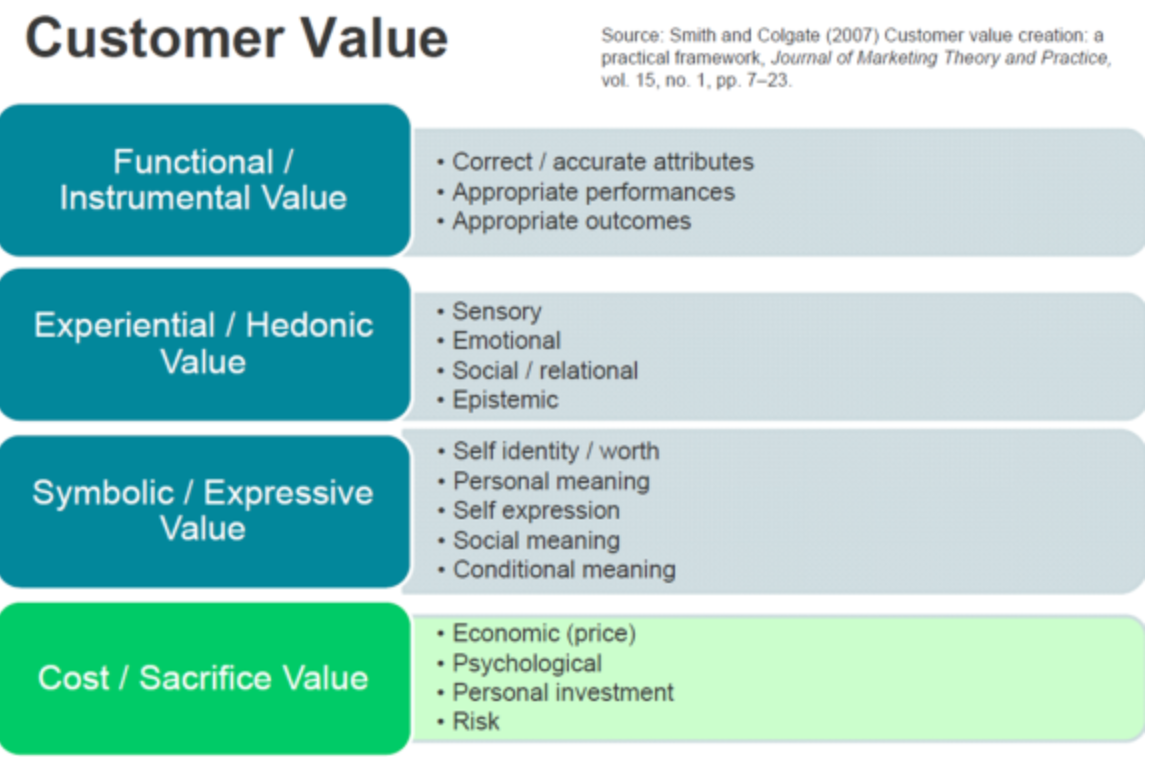
In this photo, value is divided distinctly into 4 sections.
What this means for your content is to determine yourself what value do you want to offer the audience?
Here is a run down of the different types of value and it’s:
Functional Value: The kind of content you’d write is factual and the aim is to provide an objective solution to fixing an issue.
Example: Repco’s blog on How to Replace Windshield Wipers:
Experiential Value: The kind of content you’d write appeals mainly to the experience of the offering such as providing emotional, sensory and or social recounts.
Example: Forbes writing about what it’s like to drive a Tesla:
Symbolic Value: This kind of content mainly appeals to the audience’s self-expression, identity and sense of worth and social meaning.
Example: Student Edge writing a blog on what it means to be Australian:
Student Edge’s Blog on Australian Identity
Cost Value: This value appeals to the audiences feelings of personal, economical and psychological costs.
Example: iSelect’s blog about how to save money on car insurance.
Something for you to take away!
Below are a few ads that we at Webplanners have handpicked to represent what we think to be and provide meaningful content.
Although they may have presented differently and is from different industries, the theory is still the same.
Go through at least one blog or ad and answer at least 3 of the following questions:
- Who is this ad targeting?
- What makes this ad effective and why? (How is it presented? Choice of words, imagery, tone)
- Does it build brand loyalty and keeps up to date with industry information?
- What solution is it providing to the audience?
- What value is it attempting to add to their intended audience?
Heineken Ad
https://www.youtube.com/watch?v=8wYXw4K0A3g
Neil Patel’s Blog
https://neilpatel.com/blog/google-analytics-seo-hacks/
Nasa’s Blog
https://climate.nasa.gov/blog/2679/what-caused-twin-mega-avalanches-in-tibet/
Energy Australia’s Blog
Tell us about your answers in the comment section of this blog and we will give you feedback on it too!
Conclusion
It is easy for us to say how and what it should be like.
Putting all of what we wrote into practice may be a lot harder.
The main take away is for digital marketers and businesses, you are not writing this content for yourself…
You’re writing it to your audience whom you want to engage with and reversely engage with your offerings.
Everything else is secondary.
Once you have this foundation down, then you may experiment with images and videos and links etc.
It is what we at Webplanners have started to do a lot more now that the new year has started.
 hbspt.cta.load(3445577,’c9e867ad-4f8c-4be3-9936-89344911cb88′,{});
The post What Makes Content Truly Meaningful in 2025? (A Writer’s Guide) appeared first on Webplanners.
]]>The post Why Is Branding Crucial for Marketing Success in 2025? appeared first on Webplanners.
]]>Whether you’re an agency, an individual marketer, or an entrepreneur who’s trying to ‘make it’ in the marketing world – you can probably relate to this.

Facebook Marketing in Melbourne
One of the biggest pain points for people within our industry is convincing prospects and other businesses about the importance of branding in Marketing. While there are aspects of our business that are more tangible; for example: a website, product packaging or growth in Facebook followers, there are several facets of marketing that aren’t as tangible. Aside from that, brand perception and how many people have their business at the forefront of their mind when buying.
And of course, at the end of the day – the digital space is an extremely volatile place that has marketers like us running around like headless chickens trying to navigate a constantly changing landscape.
So the amount of hard work we put into navigating the changing digital landscapes that would otherwise be so much more difficult without us, then why the resistance? And what can you do to convince them?
Communicating the importance of branding:
One thing that we’ve come to learn is that people often think of branding as the ‘fluffy’ part of not just business, but also marketing. For example, a lot of businesses would rather you mindlessly and aggressively market on Facebook to get likes rather than building a solid brand. But is it so important? Why?
- Branding will set you apart from other businesses
- It makes your brand more of a ‘human’, aligning them with the right people, making these people more inclined to buy your product over everyone else’s when they’re ready
- It stops you from being just another ‘product’ or ‘service’. This is so important, because without defining yourself as your own brand, you are essentially the same as the rest.
- It aligns every other facet of your business – how you communicate with customers, what type of content you should be making, and how you should be writing or producing it.
I mean, if Nike didn’t brand itself the way it did, what would stop people from buying sportswear from somewhere like Kmart or Target? People buy from Nike because of the way they’ve positioned themselves – and you should start doing the same for your business, no matter how big or small.

Then comes the age old question:
“But why should I spend time, money and resources on branding when I can just spend that money on getting results right now?”
To us, the answer is simple. You’re simply spending money on not having a long term direction if you’re solely results driven.
If you can get your branding right first, it’ll be easier to create valuable content for the right people. And when the time comes and they need your product or service – guess who will be on the forefront of their minds? YOU.
Small Business Social Media Expert Services in Melbourne
Webplanners is a digital marketing agency that provides more than just value through digital services. Follow us on Facebook to get regular business tips.
hbspt.cta.load(3445577,’c9e867ad-4f8c-4be3-9936-89344911cb88′,{});
FAQs
How does branding contribute to the success of a business?
Branding contributes to the success of a business by enhancing its recognition and recall value in the minds of consumers. A strong and well-established brand can attract and retain customers, increase customer loyalty, and command higher prices for products or services. It also helps businesses stand out in a crowded market and creates a sense of trust and reliability among customers.
Can branding affect customer perception?
Yes, branding strongly influences customer perception. A well-designed and consistent brand identity can create positive associations and impressions in the minds of customers. It can evoke emotions, communicate a company’s values and promises, and shape how customers perceive the quality, reliability, and overall experience of a product or service.
Does branding impact customer loyalty?
Yes, branding plays a significant role in building customer loyalty. When customers have a positive and memorable experience with a brand, they are more likely to develop a sense of trust and loyalty towards it. Strong branding creates a connection that goes beyond the product or service, resulting in long-term customer loyalty and repeat business.
How does branding influence purchase decisions?
Branding influences purchase decisions by creating familiarity, trust, and positive associations in the minds of customers. A strong brand presence increases the likelihood of customers choosing a particular product or service over competitors. Branding also helps simplify the decision-making process for consumers, as they are more likely to choose a brand they recognise and trust.
Is branding only relevant for large businesses?
No, branding is relevant for businesses of all sizes. Regardless of the size of the business, creating a strong and consistent brand is essential for establishing a unique identity in the market and building customer loyalty. Branding allows businesses to effectively communicate their value proposition, regardless of their size or resources.
Can branding change over time?
Yes, branding can evolve and change over time. As businesses grow and adapt to changing market trends and consumer preferences, it may be necessary to rebrand or refresh the brand identity. However, it is important to ensure that changes align with the core values and essence of the brand to maintain consistency and retain existing customers.
How can branding support long-term business growth?
Branding supports long-term business growth by establishing a strong market presence, fostering customer loyalty, and creating a competitive advantage. A well-recognized and trusted brand can attract new customers, increase market share, and drive customer retention and repeat business. Successful branding also allows businesses to expand into new markets and explore new opportunities for growth.
The post Why Is Branding Crucial for Marketing Success in 2025? appeared first on Webplanners.
]]>The post Why Is White Space Essential in Design? (2025 Guide) appeared first on Webplanners.
]]>White space is one of the most fundamental building blocks for an effective email, blog or webpage. However it is also one of the most commonly overlooked.
As the name suggests, white space is the white space on your page. More specifically, it is how that white space is used to shape and direct your audience. Imagine your webpage as an artist does their blank canvas. If random colour was just thrown on the canvas in no meaningful way, then it would be difficult for the view to discern the meaning. The same applies for website designs.
“Negative areas in any composition. It’s the unmarked distance between different elements that gives viewers some visual breaks when they process design, minimizing distractions and making it easier to focus.”
In any form of digital marketing, if Content is King then White Space is Queen. All too often people who have little to no background in creating effective website layouts tend to cram information into unorganised and non-meaningful ways. As a result, visually crammed data is difficult to absorb causing disengagement with your audience.
For example, let’s take a look at the images beneath.

Which ones are more likely to catch and hold your attention?


Image Source: Mark Boulton
And for this case, which one are you more likely to read?
You would conclude that both these examples have the same content but the one on the left is more cramped compared the one on the right. And you’d be more inclined to engage with the content on the right. This is because of its effective use of ‘white space’.
You would conclude that both these examples have the same content but the one on the left is more cramped compared the one on the right. And you’d be more inclined to engage with the content on the right. This is because of its effective use of ‘white space’.
Benefits of White Space
1. Improves content legibility and comprehension: Too much clutter will create disengagement and confusion with what the actual message being communicated is. You’ll scare off the reader or customer before you even get to talk to them.
2. Highlights Call-to-Action: Web designers and marketers understand that CTA buttons are important for converting potential customers into leads. The right design and amount of white space around it will create a focus point, enticing users to click it.
3. Aesthetic Value: Website designs with visual impact will increase the likelihood the user will stay on the website for longer in addition to increasing its perceived legitimacy.
4. Enhanced User navigation and experience: When considering the white space of a page, irrelevant information is removed, and the more important elements are emphasised. This creates clear navigational flow on your website, increasing the ease of use and thus the user experience.
What can you do?
In many cases, less is more. Having more white space places emphasis on the user experience and what is important on the page. It also means that your design needs to be direct and communicates the most information in the least amount of text, colours and shapes. If you are still having trouble wrapping your head around it put yourself in the shoes of your target audience and imagine if what they are seeing on the page is appealing enough to read and maintain their attention.
Some ways you can experiment and control the white spaces on your webpage are through:
- Margins
- Gutters
- Padding
- Spacing
- Kerning
- Line-height
- Word size, colour and font
Do it yourself!
A report by the Washington State University found that advertising students that lacked the basic knowledge about design formatting but learned art fundamentals such white spacing, by the end of their semester created well designed adverts (Feasley, 1983).
White space is a valuable design tool for any online designer’s or marketer’s toolkit. Now that you’ve gotten down the basics of white space it is time for you to try it yourself!
Experiment with the different elements above and have people test it to see if it is effective in communicating the most amount of information with the least amount of content.
hbspt.cta.load(3445577,’c9e867ad-4f8c-4be3-9936-89344911cb88′,{});
The post Why Is White Space Essential in Design? (2025 Guide) appeared first on Webplanners.
]]>